American Education Story

Preschool Tour has experienced and organized it directly.
American School Experience Story

MUST READ

I. Recommended Column

If this is your first time here, please read this first.

01.

English in kindergarten,
Why shouldn't it be 'study'?

When talking about English education in kindergarten, the first word that comes to mind for many parents is probably How fast and how much do you learn?It will be.

But any parent who has closely observed their child's language development will soon come to one question: “What this child needs now is English skills or a feeling for English?”

02.

American school classes,
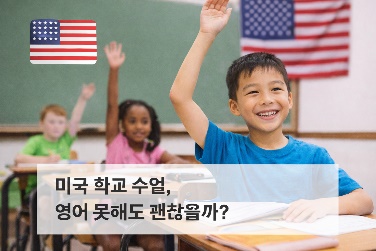
Is it okay if I can't speak English?

There is a question that parents who are considering an American school experience or schooling ask first and for the longest time. “My child barely speaks English. Will he be able to keep up with classes at an American school?”

This question is so natural, and in fact, it is the most important question.

To conclude, it's okay.

Short-term schooling or experiential programs offered at American private schools aren't just for children who are fluent in English. Most schools accept international students under the assumption that their English proficiency is limited, and they prepare an appropriate environment and provide appropriate support.

American schools prioritize "adaptation" over "understanding."

In American schools, it's more about 'how much you understood' than 'how much you understood'. How much are you participating?We consider it more important. So, even if you don't understand everything the teacher says, don't raise your hand, or don't speak up, just sitting in class, participating in activities, and being in the same space as your friends is already considered 'learning'.

The starting point of the American school experience is not English proficiency, The child's mind is open.

03.

Children in Hawaii
Why you make friends quickly

One of the most common things I hear from parents who have attended American schools or attended school is this: “I’m not very good at English, but I make friends really quickly.” In Hawaii, in particular, children integrate into the classroom and among their peers much more quickly than you might think. And it's not just because of English.

Hawaii is a familiar place for first-timers.

Hawaii is a place where diverse races and cultures coexist. Therefore, transfer students, children from other countries, and children who speak a different language at home are not perceived as special or unfamiliar at school.

Hawaiian schools build relationships first.

Hawaiian schools are naturally welcoming to children from other countries. BuddyOften, a friend is assigned to a child. A friend who tells them where the classroom is, sits with them at lunch, and plays with them during recess. These small connections signal to the child, "They're not alone here." Language comes next.

04.

Growing up without fear of English
What children have in common

Perhaps this is what parents want more than a child who is good at English. “A child who is not afraid of English.” English skills can change over time, but once you develop a fear or intimidation of English, it doesn't go away easily.

English fear begins with experience, not language.

The reason children become afraid of English isn't usually because of the language itself. It's usually because of experiences of being evaluated without understanding, or of being laughed at or criticized for making mistakes. As these experiences accumulate, English becomes less of a language and more of a source of tension.

So, children who grow up without fear of English do not see English as a ‘test’, 'A tool that connects people'Experience it firsthand.

05.

Why the preschool tour?
Should I stick to just a few gardens?

When I consult with preschool tours, I often get this question: "Couldn't we accommodate a few more children?" The answer is simple: Preschool Tours insist on small groups not for operational convenience, but for the children's experience.

What matters most to a child is not the number, but the position.

For a child, school is not simply a place to attend classes, but a place where they can find their own place. If there are too many children speaking the same language in a classroom, or if there are children from other countries crowded together, the child will create a "little Korea" within the classroom rather than blending in. Smaller classes allow each child to be a part of the classroom, one by one. Clear existenceThis is the condition that makes it happen.

The preschool tour is not about children being “from abroad”. “Friends in our class”I hope to be called that.

Section 02

II. Guide to Choosing an Educational Travel Program in the United States

An article that directly addresses parents' 'choice concerns'

01.

US Educational Travel: Camp vs. Schooling

The most confusing choice for parents when considering an educational trip to the United States is The difference between 'camp' and 'schooling'This article summarizes structural differences, recommendations based on child tendencies, and considerations for each period.

If Camp is Right for You
  • Experience-orientedactivities of
  • Short schedule (2~3 weeks)
  • If you want to reduce the burden of learning English
When schooling is right for you
  • With local friends Relationship building
  • Real Exposure to English environment
  • Recommended stay of at least 6 weeks
👉 View the original Kyobo EduCare Service column
👉 Apply for 1:1 consultation
02.

To mothers considering sending their children to study abroad at an early age

Early study abroad is not a matter of 'courage', but rather a matter that suits both the child and the mother. 'timing'It's a matter of timing. Each child's needs vary, and a mother's preparation is just as important as her child's. Therefore, early study abroad isn't just a "send-it" option; it's a process that safely connects a child to a new environment.

✔ If you are worried about studying abroad early now,
  • Short-term schooling
  • School experience with mom
✔ If you don't want to decide yet
  • Short overseas educational experience
  • Creating positive memories of the school environment
03.

How will the child change as time goes by?

When considering American school experiences or schooling, parents often ask: “How long will it take for my child to change?” The key to this question is not the duration itself, but what time enables the child.

  • 1 week (from 'strange' to 'okay'): You'll realize that school isn't as scary as you thought, and you'll get the signal that "I can handle it." The changes during this period are more about your emotions than your English skills.
  • 2 weeks (from 'observer' to 'participant'): I feel like I'm in class, reading the teacher's expression, remembering my friends' names, and saying, "I don't hate going to school anymore."
  • 3-4 weeks ('environment' to 'daily life'): Going to school becomes natural, and English becomes a part of daily life, not a conscious study. The child's transformation is first evident in comfort and stability, rather than in noticeable achievements.
  • The longer it gets: A child's transformation shifts from "adaptation" to "personalization." This is a time when the focus shifts from simply being fluent in English to developing a unique way of using it.

If you're unsure about the length of experiences your child needs right now, contact us for a consultation. We'll provide guidance tailored to your child's pace of change.

👉Calculate estimated costs
Section 03

III. Stories from School Life in Hawaii and the United States

Parents' biggest concerns are meals, friends, and break times.

01.

Lunchtime scene at a Hawaiian school

“What do kids do during lunch?” “Don’t they eat alone?” Lunchtime can be even more unfamiliar to kids than class, and even more worrisome for parents.

Lunchtime in American schools is more like a break.

Lunchtime at Hawaiian schools isn't just a quiet, sit-down meal like in Korea. Instead, it's the most relaxing time of the day. People sit at tables outside the classroom, chat with friends, and even run around after eating.

Lunchbox culture is less burdensome than you might think.

At many private schools in Hawaii, children bring their own lunch boxes: sandwiches, fruit, a light snack, and a water bottle. Even a simple lunch is perfectly acceptable. The important thing isn't how well prepared it is, but the feeling of sharing in the meal.

Even if we don't communicate, lunchtime connects us.

You don't need perfect English at lunchtime. Sitting at the same table, sharing food, and simply saying "Can I try?" is enough. Children become friends through context and atmosphere, before words.

💡 What Mom Needs to Prepare Isn't the 'Perfect Lunchbox'
The most important thing you can do is have the courage to tell your child, “Enjoy your meal, and it’s okay to sit next to your friend.”
👉 Go straight to the school lunch review
02.

What does a typical day at a Hawaiian school look like?

The Hawaiian school day isn't a rigid schedule, but rather a flow that respects a child's rhythm. This balance allows children to perceive school not as a place to "endure," but as a place they can "enjoy."

  • 7:30-8:00 AM (School Arrival): I say hello to my friends and sit down quietly to prepare for the day.
  • Morning classes (core subjects + activities): While core classes like Reading, Math, and Science are taught, it's rare to find classes where students constantly take notes, as in Korea. Instead, students discuss with their partners and work together on activity sheets.
  • Break & Lunch: It's time for children to catch their breath and connect with friends.
  • Afternoon classes (arts, physical education, and activities): Classes are offered in Art, Music, PE, STEM, and other subjects that are less burdensome and more active.
  • After school (1:30-3:00 PM): We end the day by saying hello to our teachers and meeting our parents.

Spending time with your mom after school is also important. Short conversations like, "What was the most fun thing you did today?" help your child consolidate memories and prepare for the next day.

03.

Kids' favorite time in American schools

Most of the times children enjoy are outside of class: recess, lunch, and arts and physical education classes. What these times have in common is the absence of evaluation or comparison.

1️⃣ Break time – Time to communicate without speaking

Just by kicking a ball, swinging, or standing nearby, children naturally mingle within the environment. Perfect sentences aren't even necessary during these moments. They can become friends simply through gestures, smiles, and eye contact.

2️⃣ Lunchtime – Time to make friends

This is a time when English proficiency is no longer a concern. During this time, children experience English not as something they "have to do," but as something they "use to be together."

3️⃣ PE, art, and music time – a time to showcase your child’s strengths

In classes with less language pressure, children first demonstrate their strengths. They gain the confidence to say, "Even though I'm not good at English, I can still contribute in this classroom."

Preschool Tour doesn't judge a child's English development solely on class time. The most accurate indicators are who they're with during recess and whether they laugh during lunch.
Special Contents

IV. Excerpt from the book "Conquering 2.5 Million Won at an American Kindergarten & Camp"

A story based on the real-life experiences of CEO Kang Chae-sook

This story, born from one mother's real-life experience before the Preschool Tour began, is the very first document that shaped the current Preschool Tour philosophy.

01. This is how the preschool tour began.

The preschool tour didn't start out as a grand business plan. It began with a very personal question. “Does English have to be this difficult for my child?”

As an ordinary mother who hadn't even sent her child to an English-language kindergarten, I decided to consider sending my child to an American kindergarten during my stay on a tourist visa, rather than going on an expensive early study abroad program. My goal was to make English a part of my daily life, not just a subject.

And one day, when I went to pick up the child, I heard this one thing. “Mommy~” The call contained no memorized words or practiced phrases, but it carried the comfort of a child who had accepted that space as his own.

At that moment, I realized that what my child needed wasn't how quickly he learned English, but rather the experience of becoming comfortable in English.

02. Learn English through life, not through studying.

The day in American kindergarten wasn't divided into "learning time" for English. Every moment—playing, arguing, and making up—was an English-focused environment.

Children didn't sit in chairs and memorize sentences. They spoke English when they needed to while playing, to approach friends, and to express their feelings. So, children didn't learn English as something they "had to do." 'What I want to write'was accepted as such.

The biggest change that remained for the child was not the grammar or the vocabulary, but that he was no longer afraid of English.

03. Adaptation Made Possible Because Mother and Child Were Together

What a child needs most in an unfamiliar environment is not perfect language skills. psychological safetyMoving with their mothers and feeling confident that their mothers were there, children adapted to their environment much more quickly.

This experience not only contributed to the child's growth, but also marked a turning point for the mother. That's why Preschool Tour still adheres to the principles of small classes, mothers accompanying the children, and focusing on actual school life.

If your child's English is still in its infancy, let them experience "English in everyday life" before "studying." Preschool Tour helps your child develop English throughout their day.

👉 Calculate estimated costs
책 표지
en_USEnglish
Naver Cafe Instagram